
2026 retail digitalisation outlook: AI is rewriting the cost structure of the store
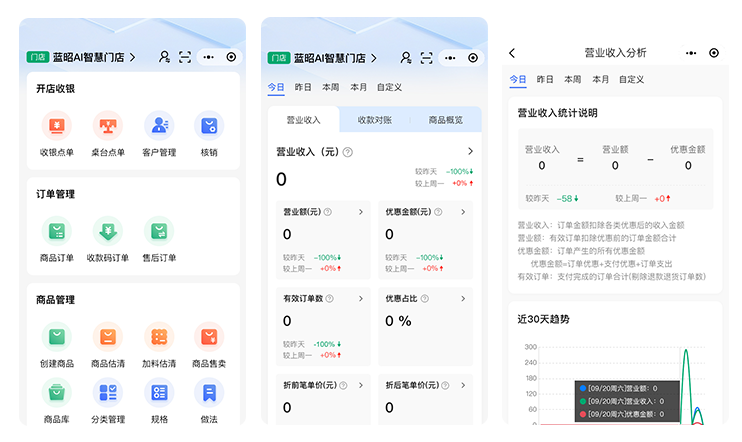
Over the past six months we revisited more than 300 small and mid-sized stores running the Lanzhao system, covering convenience stores, restaurants, fresh-food shops and community supermarkets. Laid out side by side, the data shows that the first thing AI changes in a store is not how it sells, but its cost structure.
Finding 1: labour is the first cost to be rewritten
Checkout, stocktaking and reconciliation take up a large share of a store's working hours. After introducing self-checkout and automatic stocktaking, the sample stores cut their labour input by an average of 1.4 full-time equivalents, with the biggest effect during the night shift.
Finding 2: opening hours are easier to grow than basket size
Extending opening hours from 15 to 24 looks like simply "nine more hours", but the real upside is usually underestimated — night-time orders often carry a higher gross margin, because there is less competition.
Finding 3: the data gap is widening
Stores that actually use their data have visibly better replenishment accuracy and a smaller share of slow-moving stock. The real barrier, however, is not whether reports exist, but whether the owner is willing to spend ten minutes a day reading them. That is exactly why we made our AI conversational: reading a report becomes asking a question.
Three suggestions for small stores
- Start with "nobody at night" and "stocktaking is too slow" — the return is the most direct;
- Do not deploy a full suite at once; get one scenario working, then expand;
- Make looking at data a daily habit, rather than settling the books once a month.
The full report is available from our sales consultants on request.

 Video Channel
 Douyin
 Xiaohongshu
 Kuaishou
 Bilibili